What Is a Sound Bath? A Scottsdale Beginner’s Guide to Sound Meditation
A calm, practical introduction to what happens during a sound bath, what it can feel like, how singing bowls and gongs are used, and how sound meditation differs from Reiki and traditional meditation.
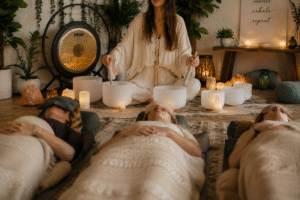
If you’ve heard people in Scottsdale talking about sound baths but aren’t quite sure what happens during one, you’re not alone. Despite the name, there’s no water involved. A sound bath is an immersive wellness experience in which you rest comfortably while a practitioner creates layers of sound using singing bowls, chimes, gongs, and other resonant instruments.
Instead of concentrating on a mantra or trying to quiet your thoughts on your own, you simply listen. For people who find traditional meditation difficult—or spend much of the day thinking, planning, solving problems, and moving from one responsibility to the next— that simplicity can be appealing.
Sound becomes the focus. And for a little while, you don’t have to accomplish anything.
What Is a Sound Bath?
A sound bath is a form of sound-based meditation or relaxation. During a session, participants typically lie down or sit comfortably while a practitioner plays resonant instruments. The sounds may begin softly, build into layers of tones and vibrations, and then become quiet again.
Common instruments can include crystal singing bowls, metal or Tibetan-style singing bowls, gongs, chimes, bells, drums, and other resonant or percussive instruments.
The word “bath” describes the feeling of being surrounded—or bathed—in sound. Unlike listening to a conventional song, there may be no melody to follow and no lyrics to interpret. Attention can rest on changing tones, vibration, silence, and the physical experience of slowing down.
Explore Lotus Livin’s sound healing in Scottsdale to learn more about the experience.
No Two Sound Baths Feel Exactly the Same
Some people become deeply relaxed. Others notice their thoughts gradually becoming quieter as attention shifts toward the sounds around them. You don’t need to force any particular response.
Body Relaxation
You may notice heaviness, softer muscles, or a sense that your body is settling more deeply into support.
Breath Awareness
The quiet setting can make your breathing more noticeable without asking you to control it.
Vibration
Nearby instruments may create physical sensations that you notice through the floor, table, or room.
Thoughts Coming and Going
Your mind may still wander. The next sound simply gives you something gentle to return to.
Sleepiness
Some participants become drowsy or drift toward a light resting state during quieter parts of the session.
Mental Quiet
Others notice brief periods where the usual planning, problem-solving, and internal commentary become less prominent.
What Happens During a Sound Bath?
Every practitioner has a different style, but most sessions follow a simple progression from settling in, to layered sound, to stillness again.
Get Comfortable
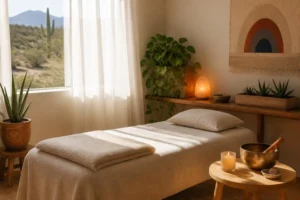
You settle onto a mat, treatment table, cushion, or chair. Blankets, bolsters, pillows, or an eye covering may be used.
Begin Quietly
A practitioner may start with breathing, a short meditation, an intention, or a few moments of silence.
Sound Builds
Singing bowls, chimes, gongs, and other instruments are introduced gradually in changing layers and tones.
Rest & Listen
There is usually nothing you need to accomplish. The experience is simply listening and noticing.
Return to Silence
The sound gradually softens and the room becomes still again before you reorient and sit up.
Why Are Sound Baths Popular in Scottsdale?
Scottsdale has a well-established wellness culture that includes yoga, meditation, Reiki, spa experiences, breathwork, and sound-based practices.
Sound baths fit naturally into that landscape because they offer a low-physical-effort way to create intentional time for stillness and relaxation. Depending on the practitioner or venue, a Scottsdale sound bath may be offered as a group meditation, private session, wellness event, or experience combined with Reiki or guided meditation.
Sound Bath vs. Meditation vs. Reiki
Sound Bath
The primary experience is auditory and vibrational. You rest while a practitioner uses bowls, gongs, chimes, and other instruments to create an immersive soundscape.
Meditation
Traditional meditation often asks you to focus intentionally on the breath, a mantra, bodily sensations, or awareness itself. Sound can provide an easier external point of attention.
Reiki
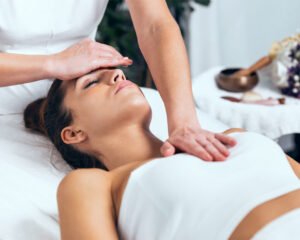
Reiki is an energy-based complementary wellness practice that generally involves light or non-contact hand placements while the recipient remains clothed and relaxed.
What Does Research Say About Singing Bowl Meditation?
Research into singing bowls is still limited. Some observational studies have reported improvements in self-reported tension, anger, fatigue, and mood after singing-bowl meditation sessions, but the evidence base remains small and stronger studies are still needed.
Sound meditation is best understood as a complementary relaxation and meditation practice, not as medical treatment for anxiety, depression, insomnia, pain, or another health condition.
What Makes a Good First Sound Bath?
Your first experience does not need to be complicated. A few practical choices can make it easier to settle in and stay present.
Wear Comfortably
Choose clothing that lets you lie or sit without constant adjustment.
Arrive Early
Give yourself a few minutes to settle rather than rushing into the room.
Create Comfort
Use available blankets, pillows, bolsters, or other supports to stay physically relaxed.
No Expectations
You do not need visions, dramatic emotions, or a completely empty mind for the experience to be worthwhile.
What Should You Look for in a Scottsdale Sound Bath?
The term “sound bath” can describe several different experiences, so compare the actual session rather than choosing by name alone.
- Is the session private or group-based?
- How long does it last?
- Which instruments are used?
- Is the experience primarily sound meditation, or are Reiki, breathwork, or guided meditation included?
- Are mats, blankets, bolsters, or eye coverings provided?
- Is the session appropriate for someone with no meditation experience?
- What should you bring or do before arriving?
Who Might Enjoy a Sound Bath?
Sound meditation can appeal to people with very different wellness routines, especially when they want structured stillness without much physical effort.
If Silent Meditation Feels Difficult
The changing tones give your attention somewhere to return when thoughts wander.
If Work Makes It Hard to Switch Off
A scheduled session creates a defined period away from screens, notifications, and problem-solving.
If You Already Enjoy Wellness Practices
People who enjoy yoga, breathwork, Reiki, or mindfulness may appreciate another path into a quieter state.
If You Want an Indoor Scottsdale Experience
Sound baths offer a restorative indoor option that does not depend on outdoor temperatures or physical exertion.
Sound Baths and the Scottsdale Summer
Arizona summer changes the rhythm of daily life. Outdoor walks, hikes, and other routines often shift to early mornings or evenings, while afternoons become more indoor-focused.
A sound bath offers a comfortable place to become still, close your eyes, listen, and step away from the pace of the day without needing an outdoor setting.
Sound Healing, Reiki, or Meditation?
There is not a universally “best” option. The more useful question is: what kind of experience feels appropriate for you right now?
If you want an immersive listening experience with an external focus and minimal physical effort.
If you are drawn to a quieter, more individualized energy-work experience.
If you want to develop an intentional mindfulness practice you can continue on your own.
Frequently Asked Questions
For additional information about Lotus Livin services and appointments, visit the Lotus Livin FAQ page.
What should I wear to a sound bath?
Wear comfortable clothing that allows you to lie down or sit without restriction. A light layer can also be helpful if you tend to become cool while resting.
Do I need meditation experience before trying a sound bath?
No. The sounds themselves provide something to focus on, so previous meditation experience is not required.
Is a sound bath the same as Reiki?
No. A sound bath centers on listening to resonant instruments, while Reiki is an energy-based complementary wellness practice generally involving light or non-contact hand placements. Some practitioners combine the two.
Can a sound bath treat anxiety or insomnia?
A sound bath should not be presented as treatment for anxiety, insomnia, or another medical or mental-health condition. Research into singing-bowl meditation is limited, although some studies have reported improvements in self-reported relaxation and mood measures after sessions.
What should I ask before booking a sound bath in Scottsdale?
Ask whether the session is private or group-based, how long it lasts, which instruments are used, what you should bring, whether props are provided, and whether Reiki, guided meditation, or other practices are incorporated.
Experience Sound and Energy Wellness in Scottsdale
Wellness does not always need to involve doing more. Sometimes the restorative choice is simply creating space to stop solving, planning, and performing for a while and become present.
Lotus Livin offers holistic wellness experiences in Scottsdale designed to create space for relaxation, grounding, and reconnection.